Buying in Murcia: budgets, uses and investment paths
Before choosing between Cartagena, Lorca or the Costa Cálida, it is useful to clarify three dimensions:
- your overall budget (purchase + fees + any renovation work);
- the main use of the property (second home, rental, life project);
- your holding period (rather 3–5 years, 7–10 years, or more).
Murcia’s strength lies in offering scenarios adapted to each profile, with prices that are still accessible and growing tourist pressure, especially on the Costa Cálida.
On the second-home specialist website Green Acres, foreign enquiries targeting the Murcia region are mainly focused on properties around €200,000 for areas over 100 m², which clearly illustrates the classic trade-off for buyers: greater comfort for a still-controlled budget.
Very accessible entry tickets (< 2,000 €/m²) for village houses
If you are looking for a base in Spain without blowing up your budget, the mid-sized towns and inland villages of Murcia are particularly attractive 💶.
You can still find:
- village houses to renovate under €80,000–100,000;
- apartments in good condition between €1,200 and €1,800/m²;
- small townhouses with patios often under €150,000.
These price levels remain well below the more publicised coastal areas, while offering generous floor space for the budget. This is what attracts buyers who want to “secure” a foothold in Spain before a possible second step towards the coast.
These areas are well suited:
- to buyers looking for a pied-à-terre to visit several times a year;
- to remote workers ready to live in a pleasant but less touristy town;
- to patient investors betting on a gradual rise in prices.
Lorca is a good example of this type of market: remarkable heritage, full services, but price per square metre significantly lower than on the coast. You can buy a larger property there, with an interesting quality of life, for the price of a small seaside apartment.
The properties that generate the most real estate enquiries in Lorca have average areas of over 130 m², confirming the appeal of family homes and properties with outdoor space.
Coastal second home or mixed seasonal rental use
If your priority is to enjoy the sea while covering part of your expenses through rental income, the resorts of the Costa Cálida become highly relevant 😎.
On the coast, in particular:
- around Cartagena, with a more urban and dynamic market;
- in the resorts of the Mar Menor, popular for their calm waters;
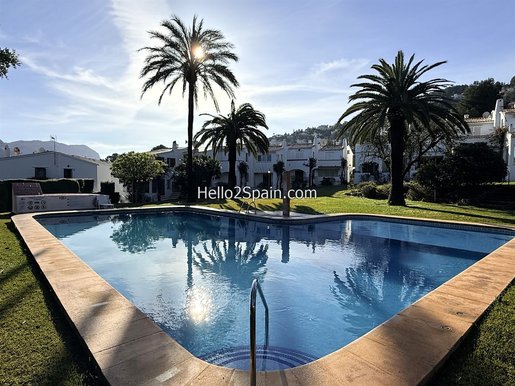
- in tourist complexes and residences with pools and services.
Enquiries observed around Cartagena show a search for a compromise between city and sea: apartments and houses of around 120 m², often in recent or well-located residences, allowing both comfortable personal use and strong rental appeal.
The key here is to think of your property in mixed use terms:
- personal occupation during the months that interest you (avoiding peak August, for example);
- seasonal rental the rest of the time to generate additional income;
- the possibility, in the medium term, of turning this pied-à-terre into a part-time or full-time residence.
The price per square metre is higher than inland, but still often lower than in major neighbouring tourist areas such as the Costa Blanca. It is this differential that creates an opportunity window for the coming years.
To refine your budget around Cartagena, you can consult property listings in Cartagena, where searches largely focus on well-located residences compatible with a seasonal strategy.
Favourable areas and expected returns
Murcia is not a homogeneous market. Depending on whether you are targeting the seafront, a golf resort or a mid-sized inland town, yields, seasonality and tenant profiles will vary greatly.
Golf resorts and seafront: strong demand, high rental yield
Golf resorts and upmarket residences near the sea attract strong international demand 🌍.
These areas offer several advantages for an investor:
- a steady foreign clientele (retirees, remote workers, holidaymakers);
- comprehensive infrastructure: security, swimming pools, green areas, sometimes a spa and club house;
- year-round appeal for some complexes, not just in summer.
In practice, this often translates into:
- gross yields potentially higher than in inland towns, if management is well optimised;
- better liquidity on resale, thanks to sustained demand from European buyers;
- a more “turnkey” product that is easier to manage remotely via a local agency.
Data on foreign visitors to Murcia confirm this trend: the French account for around 18% of international enquiries, ahead of the Dutch, Germans and Belgians, with median prices between €190,000 and €240,000 for properties generally located in these most sought-after areas.
However, pay attention to:
- carefully analysing the sometimes high service charges in resorts;
- checking local regulations on tourist rentals;
- studying occupancy histories (occupancy rates, nightly rates).
On the Costa Cálida seafront, studios and small apartments with sea views or close to the beach remain the most sought-after, both for purchase and for holiday rentals.
Inland market: 5–10 year capital gain potential
In parallel, the inland market (Lorca, small towns and villages) offers lower seasonal rental returns, but interesting medium-term appreciation potential ⏳.
The factors that can support prices over 5–10 years:
- a progressive shift in demand from coastal areas that have become more expensive;
- improvement of infrastructure (roads, rail, public services);
- growing appeal of calmer, more human-scale lifestyles.
In these areas, the classic strategy is to:
- buy at a very reasonable price per square metre;
- renovate to bring the property up to date, with a controlled budget;
- rent it out long-term or keep it as a family second home;
- sell once the market has made up part of its lag.
The annual yield may seem more modest, but the combination of “low purchase price + improvement + long horizon” can generate a strong capital gain if you are willing to be patient.
Murcia, a strategic market for controlled budgets before prices take off
In Spain, many coastal regions have already seen strong price increases, driven by foreign buyers and international tourism. Murcia, however, is still in a catch-up phase 📈.
The signals that make it a strategic market:
- prices still below some better-known neighbouring areas;
- a varied offer: urban in Cartagena, heritage-rich in Lorca, seaside on the Costa Cálida;
- decent connectivity with the rest of Europe (nearby airports, motorways);
- a particularly attractive climate, both summer and winter.
The buyer profiles that emerge from Murcia’s data confirm this “controlled budget” positioning: whether from France, the Netherlands, Germany or Belgium, most are targeting properties of 100 to 120 m², at median prices between €180,000 and €240,000, which remains competitive compared with the major Spanish coastal regions.
For a buyer with a controlled budget, this opens up several possible paths:
- starting with a small property inland, then upgrading towards the coast;
- buying straight away on the Costa Cálida before price pressure increases further;
- settling in gradually: seasonal rentals, longer stays, then main residence.
The real question is not just “Cartagena, Lorca or the Costa Cálida?”, but rather:
- what balance are you looking for between pleasure use and yield?
- are you willing to accept a slightly more inland location for better size/price value?
- do you want a property ready to rent immediately, or one to add value to through renovation?
By clarifying these points, it becomes easier to choose your area and build a strategy consistent with your life project… and your budget.