The Iconic Villages of Tuscany
Montepulciano, San Gimignano, Pienza: UNESCO Treasures
These hilltop villages are the soul of the region. Montepulciano overlooks the vineyards, San Gimignano raises its medieval towers, and Pienza, reinvented by Pope Pius II, embodies Renaissance urban planning and the Val d’Orcia, a UNESCO World Heritage site. 🏛️
For real estate purchases, historic centers are splendid but protected: specific materials are required, windows must be identical, and the Soprintendenza strictly controls modifications. Limited Traffic Zones (ZTL) impact daily life and vacation rentals.
- Check the conformità urbanistica (building compliance) and the catasto (land registry).
- Check for parking (garage, right of way) and noise on lively squares.
- Plan for maintenance of stonework and old tile roofs.
Price indicators (popular properties):
- Real estate in Montepulciano, searches show an average of around €605,000 for generous surface areas (average price ≈ €1,205/m²)
- Real estate in San Gimignano, approx. €464,000 (≈ €1,398/m²)
- Real estate in Pienza, advertised averages are about €579,000, with very large estates increasing the average area.
Who buys? In the province of Siena, foreign demand on Green Acres comes primarily from the USA (~21%), then France and Germany (~9% each), a mix which sustains regular demand for UNESCO centers and their neighboring villages.
Medieval Architecture and Timeless Charm
Stone walls, cotto floors, vaulted ceilings, and exposed beams: a warm setting, but one that requires meticulous work. Thick houses stay cool in summer but require good ventilation in winter.
- Watch for humidity (rising damp) and the quality of breathable plasters.
- Request the APE (energy certificate) and conformità impianti (electric, gas).
- Involve a geometra for technical due diligence before making any offer.
Wine Villages of Chianti and Val d’Orcia
Montalcino, Greve, Gaiole: Birthplaces of Tuscan Wine
Here, the pace of the grape harvest shapes local life. Montalcino (Brunello), Greve and Gaiole (Chianti Classico) offer picturesque landscapes of vineyards and cypress trees. 🍇
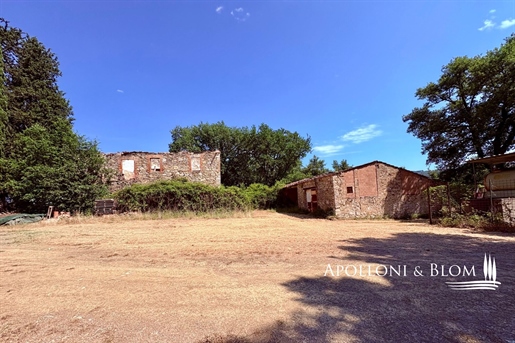
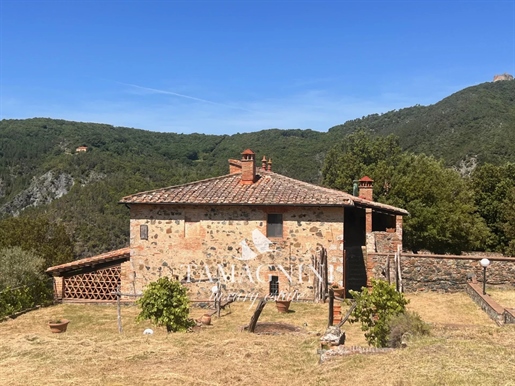
Typical properties? Stone casali in Montalcino, case coloniche in Greve, small village homes in Gaiole. Vineyard estates require expert management; for residential use, properties near wine cellars and agriturismi may offer seasonal rental income.
- Confirm access to paths and the quality of rural roads.
- Find out about farming neighbors (seasonal noise, treatments).
- Check water rights and wind exposure on hills.
Who buys? In the Florence area of Chianti, foreign demand is driven by American buyers (~23%), followed by the French (~12%); a context that supports character properties with views and easy access from the Tuscan capital.
Scenic Routes and Local Gastronomy
The Chiantigiana (SR222) winds between villages and castles, while the SP146 reveals the iconic panoramas of the Val d’Orcia. 🚗
Between pici, ribollita, pecorino and new olive oil, weekly markets punctuate the year. To live locally:
- Identify shops, schools, medical services year-round, not just in high season.
- Note market days and village festivals (crowds, parking).
- Test daily commutes and access times outside of summer.
Villages of Artisans and Artists
Pietrasanta and Cortona: Culture and Art Galleries
A stone’s throw from Carrara, Pietrasanta pulsates with the sound of marble workshops: foundries, galleries, artists’ cafes. Cortona combines Etruscan heritage, lively alleys, and views over the Val di Chiana. 🖼️
Their cultural dynamism attracts an international clientele and summer events. For investment, small, well-located properties are easy to rent short-term and comfortable year-round.
- Check festival calendars (noise, crowds) before buying near main squares.
- Assess sunlight in alleyways and wind exposure.
- Compare condominiums (condominio) and their maintenance fees.
Price indicators:
- Houses for sale in Pietrasanta, very popular near the coast, shows an average of ≈ €668,000 and ≈ €5,613/m²
- Houses for sale in Cortona, expect ≈ €568,000 on average for ≈ €2,021/m²
Who buys? Around Lucca, foreign demand is led by the USA (~15%), then Switzerland and France. In Arezzo, Americans represent ~22%, ahead of France (~8%) and Germany; a signal of international interest in these art towns.
New Artist Residencies and Creative Tourism
Many villages host shared workshops, artist residencies and programs to restore traditional craftsmanship. A boon for anyone seeking a stimulating environment and active communities. ✨
- Check connectivity (fiber, 4G/5G) and operator coverage.
- Find out about local rules for short-term lets (different from big cities).
- Identify art schools, rural coworkings, and cultural associations.
Tuscany, the Elegance of Small Italian Towns
The magic of Tuscany lies in the balance between heritage, nature, and lifestyle. Village life means walking everywhere, meeting neighbors at the café, enjoying the light that gilds the stone at sunset. 🌅
Prices vary greatly depending on proximity to tourist hubs, views, condition, and surface area. As a guideline, averages are around €1,200–1,400/m² in iconic Sienese villages, about €2,700–3,000/m² in Chianti, and up to ~€5,600/m² in Pietrasanta. These benchmarks from Green Acres reflect in-demand properties (often beautiful estates) and do not substitute local valuations.
- Define your project (main residence, secondary, mixed with rental).
- Specify the desired setting: lively village, secluded hamlet, hillside vineyard.
- Inspect the structure (roof, frame), humidity, and heating.
- Conduct thorough due diligence with a geometra and notaio: title, catasto, compliance, easements.
- Anticipate additional costs (registration tax, notary, agency, surveys).
- Consider heritage constraints (vincolo paesaggistico) on renovations and colors.
UNESCO centers are more sought after; neighboring villages may offer better value for money without sacrificing charm. 🌿