One of Portugal’s most affordable markets
Average prices in the city of Beja
In town, apartments and townhouses remain competitive compared with the Algarve or Lisbon. Values vary according to condition and location, with high dispersion due to a low volume of transactions.
- Older apartments: often in an indicative range of 1 000 to 1 600 €/m².
- Townhouses to renovate: entry budgets starting at 70 000–130 000 € depending on work.
- Renovated or recent properties: a 10–30% premium for turnkey condition.
Tip: target streets close to services (market, schools, healthcare) and check the energy performance; summers are hot, insulation quality matters 🔆.
Village houses and small quintas
In the villages of the Baixo Alentejo, you can find traditional houses and small quintas (0.5 to 5 ha). Prices depend on water access, the state of the buildings and agricultural potential.
- Small habitable quintas: around 120 000–280 000 € depending on area and water.
- Houses/ruins to rehabilitate: 40 000–100 000 € excluding works.
- Dry land vs irrigated: access to the Alqueva network can multiply the value/ha.
Points to check before buying:
- RAN/REN (agricultural/ecological zones) and the rules of the municipal PDM.
- Boreholes, wells, water rights, quality/quantity (tests and licences).
- Boundary surveys, access easements, condition of fences.
- Licences: caderneta predial, registo, possible licença de utilização.
Large low-cost agricultural properties
Large estates (>50 ha) show attractive prices/ha compared with other regions of Europe 🚜. Ranges vary greatly depending on soils, slopes and irrigation.
- Dry (cereals, pasture): order of magnitude 3 000–8 000 €/ha.
- Irrigated (olive, vine, almond): often 12 000–25 000 €/ha and up.
- CapEx to plan for: fences, tracks, water storage, farm buildings, solar energy.
Make a realistic operating plan: labour, mechanisation, insurance and CAP aids can change the profitability equation.
Real estate and agriculture: an inseparable duo
Olive grove and vineyard estates
The Alentejo is a terroir of olive trees and vines 🍇🫒. Cooperatives, mills and wineries facilitate valorisation, but models differ.
- Intensive vs traditional olive growing: yields and water needs are very different.
- Vine (DOC Alentejo): enotourism potential, but strong agronomic requirements.
- Water/irrigation: secure reserves (reservoir, borehole) and regulatory compliance.
Request an agronomic analysis (soils, pH, salinity) and a water balance; this weighs more than price/ha alone.
Traditional farms and Alentejo « montes »
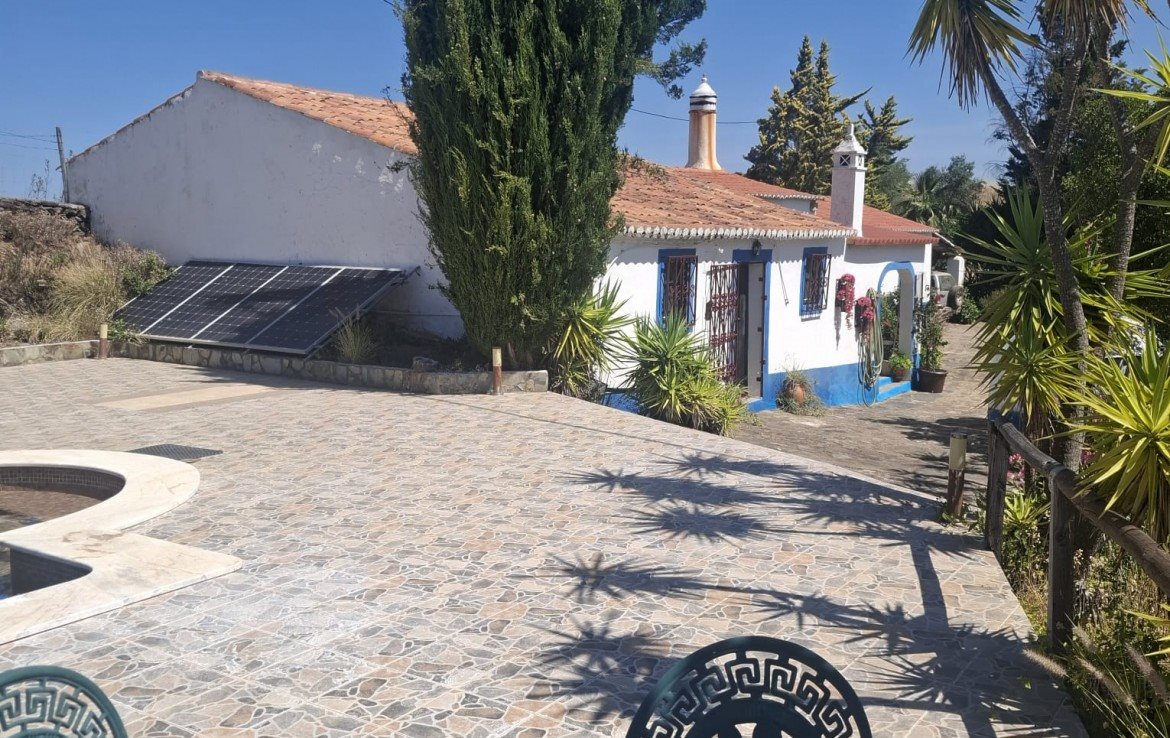
The montes, white houses bordered with blue, offer charm and space. Before buying, assess the structure, roof and thermal comfort.
- Insulation, thermal mass, shading: essential facing summers >35 °C.
- Sanitation: septic tanks up to standard, possible update required.
- Energy: photovoltaic/thermal solar often relevant for self-consumption.
- Extensions/works: consult the town hall for a PIP (project feasibility).
Opportunities in agritourism
Rural tourism is growing, driven by slow travel and local experiences 🌿. Two common frameworks:
- TER (Turismo em Espaço Rural): Casa de Campo, Agro-Turismo, safety requirements.
- AL (Alojamento Local): lighter, but local rules and quotas may apply.
Key success factors:
- Access and signage, reliable Wi‑Fi, well-managed seasonality.
- Products/experiences: grape harvest, olive picking, hiking, Alqueva’s starry skies.
- Procedures: municipal licence, insurance, fire safety compliance.
Who buys in the Baixo Alentejo?
Portuguese attached to rural roots
Many local families or those returning from the diaspora take over a village house or a small quinta. Objectives: main residence, vegetable garden, a few olive trees.
- Measured budgets, strong attachment to family heritage.
- Works carried out over time, with local craftsmen.
Foreigners seduced by the sun and space
European buyers appreciate the wide open spaces, safety and low cost of living. Remote work and agro-ecological projects are gaining ground ✨.
- Search for calm, land area, and self-sufficiency (water/energy).
- Interest in agritourism and high-quality micro-farming.
In the listings consulted for the Baixo Alentejo, no foreign buyer is currently recorded, which nuances the image of a massive influx of international buyers.
Retirees seeking calm and low prices
Retirees look for single-storey properties close to services and easy to maintain. The hot climate requires good ventilation and shade.
- Priorities: local healthcare, shops, community.
- Summer comfort: awnings, trees, cross-ventilation, efficient air conditioning.
What future for the Alentejo rural market?
Growing interest in ecotourism
Demand for authentic nature experiences remains dynamic. Star gazing, walks, gastronomy and heritage are lasting assets 🌌.
- Human-scale investments are preferred.
- Local partnerships (guides, producers) to extend the season.
Valorisation of wine quintas
The upgrading of some Alentejo wines boosts the region’s image. Well-located and well-managed quintas can create value combining production and hospitality.
- Organic/regenerative: differentiators sought by the market.
- Distribution: winery shop, short circuits, niche exports.
Risk of economic stagnation outside tourism
Outside agriculture and tourism, activity remains limited. Drought and the cost of water are risks to monitor 💧.
- Purchase strategy: proximity to a town, secured water, mixed use (residential + activity).
- Total budget: purchase price + 6–10% fees (IMT, notary, registration, lawyer).
- Due diligence: water/soil studies, urban planning compliance, energy and access.
In short: an affordable market, with strong potential for sober projects, well prepared and adapted to the climate.